Travertine Floor Care & Restoration Guide
Travertine is a beautiful and characterful natural stone, well known for its warm tones and distinctive appearance. Unlike many other stones, travertine naturally contains thousands of small air pockets and voids within the surface. These holes are normally factory filled, but over time the filler can wear away or break down, leaving the floor prone to trapping dirt, developing holes and showing signs of wear in higher traffic areas.
Below are some of the most common issues we see with travertine flooring and how professional restoration can help revive the appearance of the stone.
Our Travertine Restoration services can be found here.
01
Why Does Travertine Trap Dirt So Easily?
Travertine naturally contains many small pits and voids which can collect dirt and grime over time, especially once the original fillers begin wearing away. Professional deep cleaning combined with repairs and refinishing can dramatically improve both the cleanliness and overall appearance of the floor.
02
Can Cracks And Holes In Travertine Be Repaired?
Yes. Loose filler, small holes and minor cracks can often be professionally repaired using colour-matched resin fillers before refinishing the surface. This helps restore the integrity and appearance of the floor while maintaining the natural character of the stone.
03
Why Does Travertine Start Looking Patchy Or Tired?
Incorrect cleaning products, detergent residue, worn sealers and general foot traffic can all leave travertine looking uneven or dull over time. Many floors we see simply require a combination of deep cleaning, light refinishing and sealing to bring back colour and clarity.
04
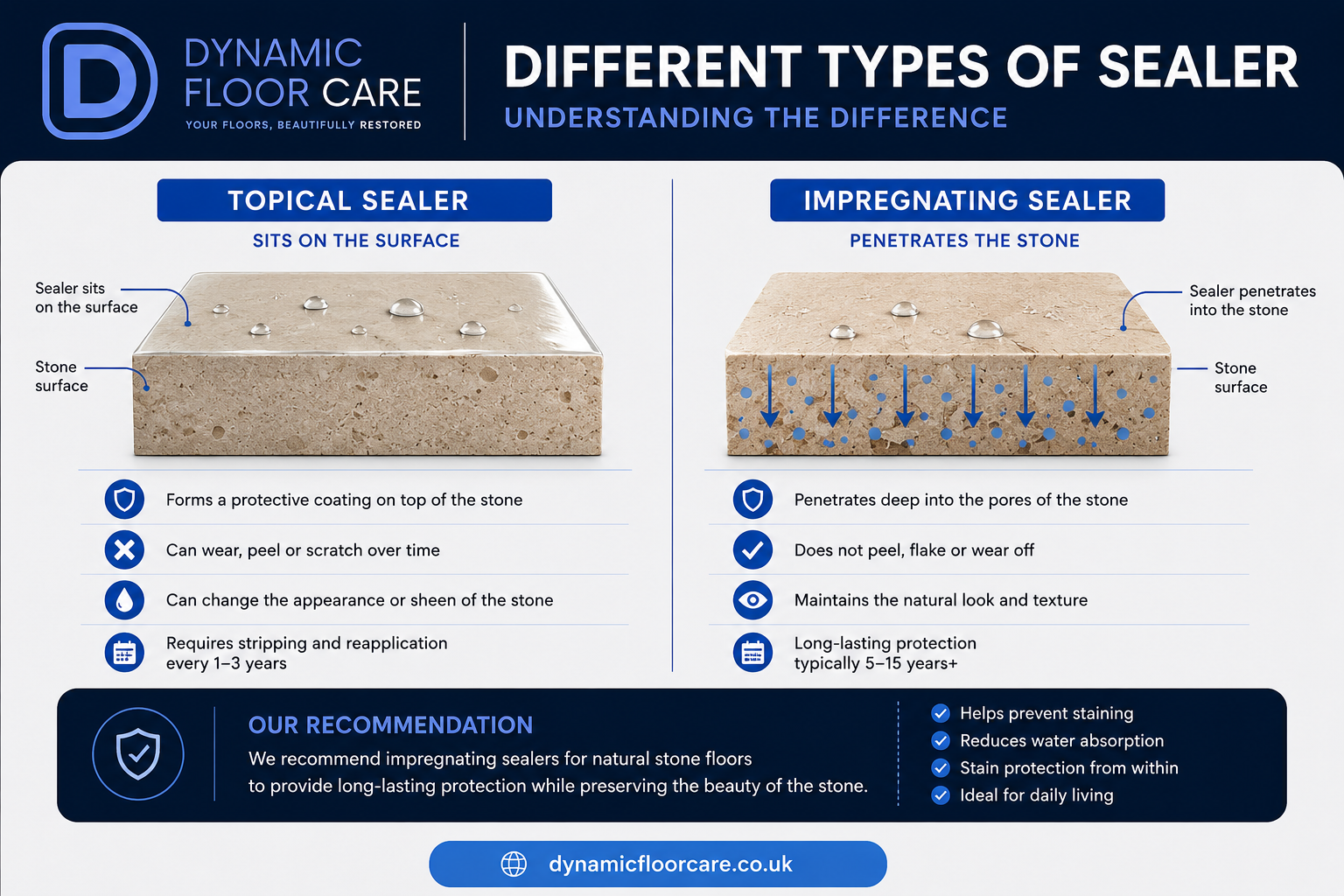
Does Travertine Need Sealing?
Travertine should normally be protected using a quality impregnating sealer to help reduce staining and improve maintenance. Depending on the finish required, some sealers can also help enhance the natural depth and warmth of the stone while keeping the surface looking more consistent for longer.